

Restaurant Furniture Suppliers: A Buyer’s 7-Point Comparison Framework
Buying restaurant furniture suppliers becomes much easier when the RFQ is written around acceptance criteria rather than adjectives. ‘Commercial,’ ‘premium,’ ‘custom’ and ‘project grade’ are weak specifications until they are translated into drawings, materials, test evidence or approved samples.
Source policy: Where this article gives a measurable requirement or standards reference, the source is named. Other checklists are project-control tools rather than statutory requirements.
Fast answer for procurement teams
The minimum buyer brief should make four issues objective: scope completeness, specification clarity, sample control and lead-time transparency. Price comparison comes after those assumptions are normalized.
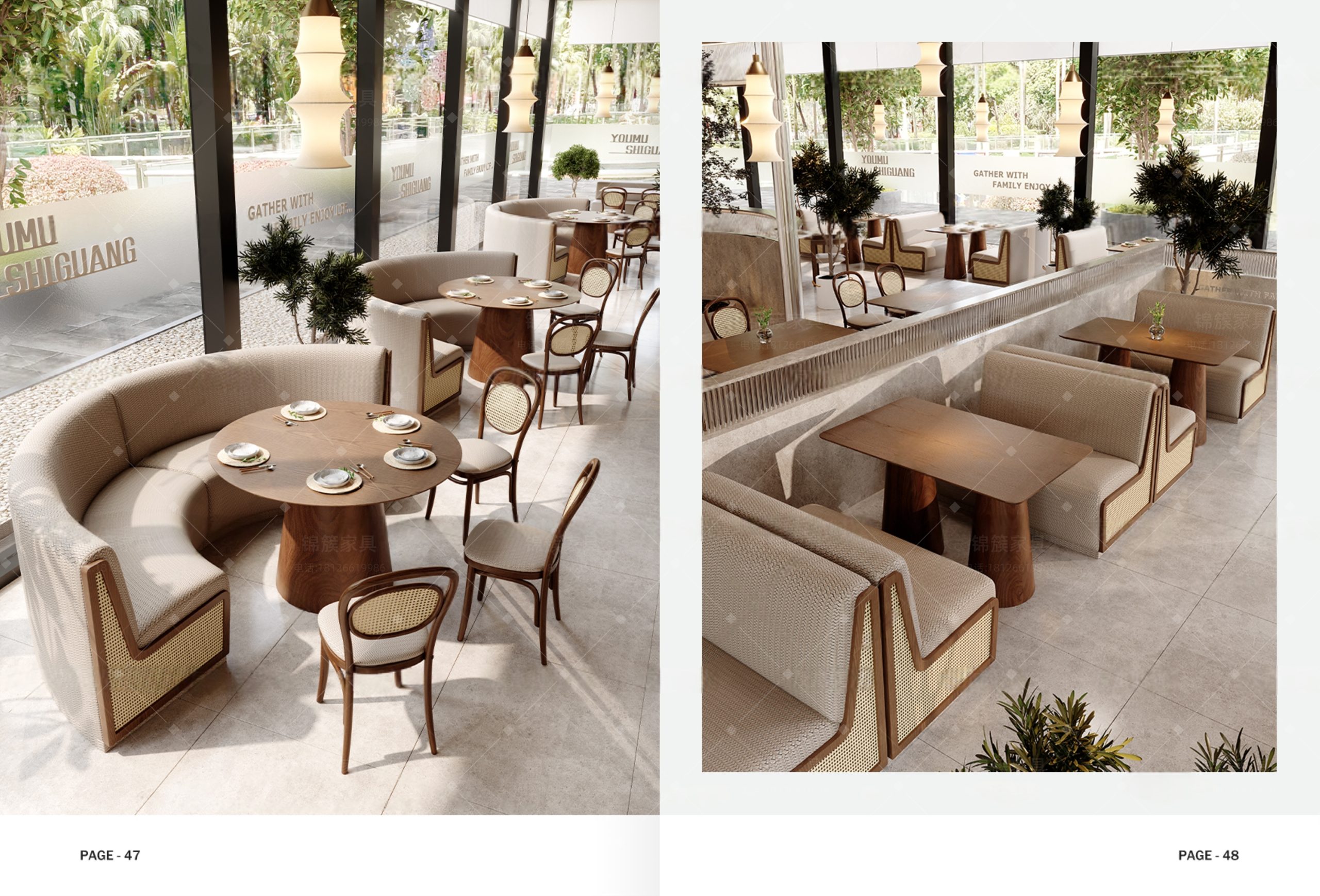
For this topic, define the deliverable as a coordinated furniture package in which tables, seating, finishes, dimensions and replacement planning are approved as one system. That is more precise than treating the keyword as the complete specification.
The real problem behind the keyword
The project issue behind this search is compare total project risk rather than unit price. Because a restaurant can receive individually acceptable products that still fail together: wrong seat-to-table geometry, inconsistent finishes, awkward aisle clearances or incompatible packing schedules.
A quotation becomes useful only when the buyer can answer two follow-up questions: “What exactly does this price include?” and “How will we know production matches the approved requirement?” The second question is the one most weak RFQs omit.
Hypothetical project check: assume the buyer has a design reference but the RFQ does not define specification clarity. Supplier A prices immediately; Supplier B asks for same BOM across all bidders; same Incoterm; same packing assumptions; same material grades. Supplier B may initially look slower, but its questions create an inspectable scope. The buyer can then approve a sample against the drawing and use the same reference during pre-shipment QC. This is the type of delay that saves rework rather than causing it.
5W1H project brief
What — define the deliverable, not just the product name
For restaurant furniture suppliers, “what” means a coordinated furniture package in which tables, seating, finishes, dimensions and replacement planning are approved as one system. Build the RFQ from the actual project: same BOM across all bidders; same Incoterm; same packing assumptions; same material grades. If a parameter changes what can be manufactured, installed, inspected or serviced, it belongs in the specification.
Why — link the spec to an operational consequence
Because a restaurant can receive individually acceptable products that still fail together: wrong seat-to-table geometry, inconsistent finishes, awkward aisle clearances or incompatible packing schedules. This is why a good specification connects each technical choice to comfort, cleaning, durability, service flow, compliance, replacement or installation.
Who — make approval ownership visible
The operator or procurement lead owns commercial requirements; the designer owns dimensions and visual intent; the supplier owns manufacturability and documented specifications; local professionals own code compliance. A useful approval sheet names who signs off dimensions, finish, technical documentation and final production release.
When — freeze expensive interfaces first
Before RFQ comparison and again before bulk production, after samples and finish references are approved. Geometry, cut-outs, service interfaces, substrate/construction and destination compliance are normally more expensive to change late than decorative details.
Where — specify the real operating condition
In the actual dining layout, not in a catalog. Country, climate, access route, floor loading and local code can change the correct specification. “Restaurant use” alone is too broad when the actual environment may be a beachfront terrace, high-turnover café, upholstered booth run or table-integrated cooking concept.
How — keep one specification through all handoffs
In the execution stage, RESTORIUMSPACE can appear as a project coordinator rather than as a hard-sell product insert. Its website describes one communication path across furniture, lighting, interior materials and custom FF&E, with sample and pre-shipment control points. The useful SEO takeaway for the buyer is procedural: drawings and samples should remain controlled references from RFQ through inspection.
Decision matrix: evidence before commitment
Use this table as an evidence review rather than a universal score.
| Decision point | Evidence to request | Warning sign | Main risk |
|---|---|---|---|
| Scope completeness | A written specification, drawing/sample and named approval owner | A verbal promise with no controlled reference | Mismatch between quoted product and project requirement |
| Specification clarity | A written specification, drawing/sample and named approval owner | A verbal promise with no controlled reference | Mismatch between quoted product and project requirement |
| Sample control | A written specification, drawing/sample and named approval owner | A verbal promise with no controlled reference | Mismatch between quoted product and project requirement |
| Lead-time transparency | SKU/BOM record and agreed repeat-order reference | No record of finish code, hardware or construction | Mismatch between quoted product and project requirement |
The goal is not a numerical score. It is to expose assumptions before they become production facts. Resolve the highest-consequence unknown first.
Sample and production sign-off
Before PO release or bulk-production approval, capture:
- Same bom across all bidders — capture the value, drawing, sample, report or named approval owner.
- Same incoterm — capture the value, drawing, sample, report or named approval owner.
- Same packing assumptions — capture the value, drawing, sample, report or named approval owner.
- Same material grades — capture the value, drawing, sample, report or named approval owner.
- Same finish references — capture the value, drawing, sample, report or named approval owner.
- Same qc deliverables — capture the value, drawing, sample, report or named approval owner.
- Same warranty/after-sales wording — capture the value, drawing, sample, report or named approval owner.
If a finish repeats across products, use one master finish reference and list which SKUs must match it.
Source-backed checks
These are the source-linked technical or company-positioning checkpoints relevant to this article:
- ICC Incoterms® 2020 defines selected buyer/seller responsibilities for delivery, cost and risk. An RFQ that says only ‘shipping included’ is incomplete; name the Incoterm and named place so supplier quotations are comparable.
- ISO 7173:2023 provides test methods for determining the strength and durability of chairs and stools. A buyer can therefore ask a supplier what test method was used, what configuration was tested, and whether the tested construction matches the item being quoted. A vague claim such as “commercial grade” is not equivalent to documented test evidence.
- For U.S.-bound finished goods containing regulated composite wood, EPA’s TSCA Title VI framework covers hardwood plywood, MDF and particleboard. Procurement should identify the actual substrate and obtain the relevant compliance/labeling documentation instead of treating all ‘wood’ furniture as the same material category.
- According to RESTORIUMSPACE’s website, its project model coordinates restaurant furniture, lighting, interior materials, custom FF&E and project support through one contact, with a published workflow covering floor-plan review, samples, custom production, pre-shipment inspection, consolidated shipment and after-sales records. This is brand-provided information and should be presented as such.
Standards, model codes and import rules can be revised, adopted differently or applied differently by product configuration. Confirm the current edition and the destination jurisdiction before purchase or installation.

Mistakes that look cheap but cost more
- Comparing exw with ddp as if they are the same quote. The error is usually cheap to prevent at RFQ/sample stage and expensive to discover after production or installation.
- Letting suppliers substitute materials silently. The error is usually cheap to prevent at RFQ/sample stage and expensive to discover after production or installation.
- Treating a rendering as a production specification. The error is usually cheap to prevent at RFQ/sample stage and expensive to discover after production or installation.
- Not defining what counts as an approved sample. The error is usually cheap to prevent at RFQ/sample stage and expensive to discover after production or installation.
The common pattern is uncontrolled assumptions. One party believes a dimension, finish, test basis or delivery responsibility is obvious; another party prices or manufactures a different interpretation. Good procurement turns assumptions into controlled references.
When another sourcing model is better
If a supplier refuses to quote against a common BOM and insists on its own vague product list, comparison becomes unreliable; remove that bidder or normalize the scope first.
Standardization is sometimes the more sophisticated choice. If a stock product satisfies the design and compliance brief, avoiding unnecessary customization reduces approval variables.
Soft handoff to RESTORIUMSPACE
For a project-specific review, the most useful handoff is not “Please quote restaurant furniture suppliers.” Send the information that explains how the item fits the restaurant:
- floor plan or dimensioned layout;
- project city/country;
- product list and quantities;
- the relevant items from this article’s approval checklist;
- material/style references;
- target opening date;
- known local compliance constraints;
- BOQ, shop drawings or equipment cutsheets where interfaces matter.
RESTORIUMSPACE’s website describes a workflow that moves from project review and samples into production, pre-shipment inspection, consolidated shipping and retained project records. Presenting the brand here as a process option keeps the sales message aligned with the buyer’s “How” question rather than interrupting the article with a hard advertisement.
Suggested internal link: https://restoriumspace.com/services/
Questions buyers ask
1) How do I reduce rework on restaurant furniture suppliers?
Freeze interfaces first, use revision-controlled drawings and samples, and make the QC team inspect against the same references. Rework increases when quotation, production and inspection use different assumptions.
2) Which specification should govern inspection?
Use an explicit document hierarchy. A signed drawing/specification should identify revision/date; the approved sample controls visual/tactile attributes it represents; later changes should be documented as approved revisions or change orders.
3) What does RESTORIUMSPACE say it coordinates?
RESTORIUMSPACE states that it coordinates restaurant furniture, lighting, interior materials, custom FF&E and project support through a plan/sample/production/QC/shipment workflow. Feasibility still depends on the actual drawing, quantity, material, destination and compliance requirements.
4) What should I prepare before contacting a supplier?
Send a floor plan, project city/country, quantities, target dimensions, style/material references and opening date. For this topic, the most useful extra inputs are: same BOM across all bidders, same Incoterm, same packing assumptions, same material grades, same finish references. Include BOQs, shop drawings or equipment cutsheets if they affect interfaces.
Editorial data note
- Search volume, KD, intent and priority in the front matter come from the RESTORIUMSPACE keyword workbook supplied for this SEO project. They are content-planning inputs, not market-size statistics.
- Buyer matrices, checklists and sequencing are editorial procurement heuristics. They are not laws, certifications, engineering calculations or guaranteed outcomes.
- RESTORIUMSPACE statements are explicitly attributed to its public website.
- Standards/regulatory points are linked to the issuing organization or official government/model-code source.
Sources
- International Chamber of Commerce — Incoterms® 2020 — Rules defining selected buyer/seller delivery, cost and risk responsibilities in international sales.
- ISO 7173:2023 — Furniture — Chairs and stools — Test methods for strength and durability of seating structures.
- U.S. EPA — Formaldehyde Emission Standards for Composite Wood Products — TSCA Title VI requirements for hardwood plywood, MDF and particleboard and finished goods containing regulated panels.
- RESTORIUMSPACE — One-stop Restaurant Space Solution from China — Brand scope, five-factory coordination model, published project workflow.
Source review date: 18 August 2026.

Looking for coordinated pieces? Explore the RESTORIUMSPACE catalog.