

How AI is Transforming Restaurant Space Design in 2026
Hero caption: A restaurant interior delivered by the Restoriumspace system — design, FF&E, tableware and lighting consolidated under one schedule.
Restaurant design has always been a coordination problem as much as an aesthetic one. In 2026, the discipline is being reshaped by a stack of AI tools that compress the front-end of a project — concept, schematic, FF&E specification and procurement BOM — from weeks of back-and-forth into days of focused iteration.
This article walks through where AI is actually changing the workflow, where it isn’t, and what it means for owners opening a restaurant this year.
Three places AI is genuinely moving the needle:
1. Concept-to-schematic compression.
A mood board plus a written brief, fed into a generative model trained on hospitality interiors, produces a usable schematic direction in hours rather than days. The output is a starting point — not a finished design — but it collapses the ‘what do you mean by that’ loop that eats the first two weeks of most projects.
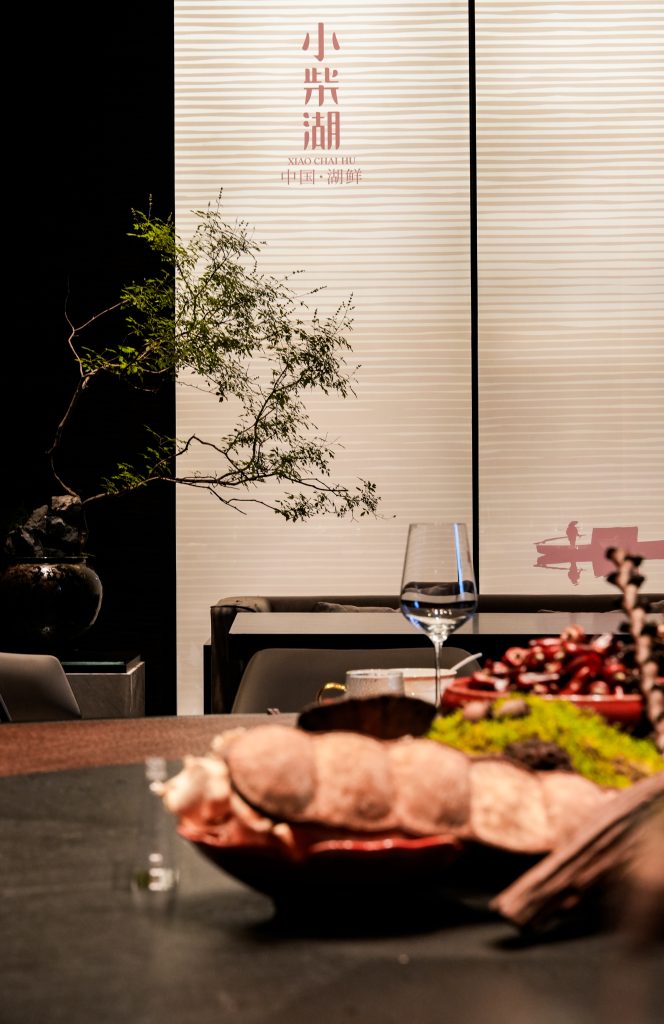
2. FF&E specification and BOM generation.
Once the schematic is locked, an AI-assisted spec engine can map every line item to a real product in a stocked catalog, attach a lead time and a country-of-origin, and produce a procurement-ready BOM. For a 240-seat hotpot hall, that’s roughly 600 line items — most of which used to be specified by hand.
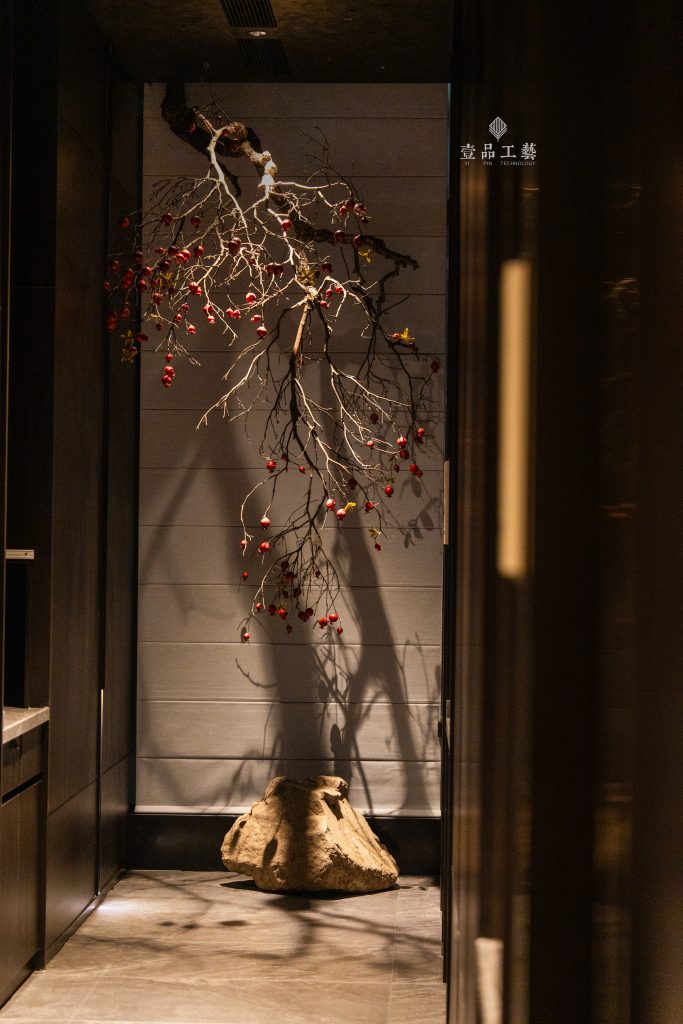
3. Lighting simulation.
AI-driven rendering can now produce usable lux readings, color-rendering indices and shadow studies from a schematic before a single fixture is specified. That lets the design team lock the lighting narrative at concept stage rather than discover it on site.
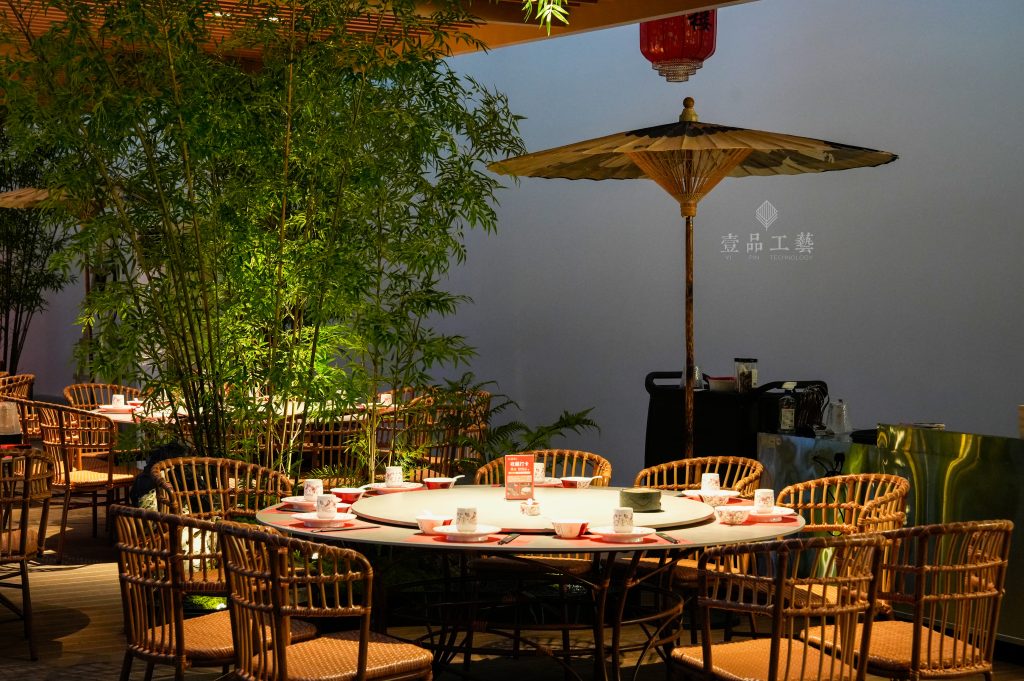
Where AI doesn’t help (yet): on-site decisions. A model can tell you the design intent calls for a 4000K downlight at 600 lux. It cannot tell you that the GC’s drywaller moved a bulkhead 80mm and the fixture now lands above a column. The Restoriumspace answer is to keep the AI in the front-end and put a project manager on site.
The 2026 takeaway: AI is a tool, not a replacement. The studios that win will be the ones who use it to compress the front-end, then ship a real team to manage the back-end. Read: design + FF&E + tableware + lighting + install, in one accountable chain.